Your air conditioning system is about to face its biggest test of the year. April marks the calm before the storm, that brief window between comfortable spring weather and the relentless summer humidity that forces AC units to run nearly nonstop from May through October.
Here’s what we see constantly in our work as a South Florida restoration company: AC condensate drain lines that seemed perfectly functional in April fail spectacularly in June, flooding closets, ceilings, and walls with water that creates ideal mold conditions. After 18+ years responding to these calls throughout Palm Beach and Broward Counties, most of these failures were preventable with simple April maintenance.
Why April Is Critical for AC Drain Line Maintenance
South Florida’s AC systems don’t just cool air; they remove massive amounts of moisture. During peak summer months, a typical residential system pulls 20-40 gallons of water from indoor air daily. That condensation travels through a drain line no wider than your thumb.
From November through April, your system runs intermittently and condensation production remains manageable. Then late May arrives. Humidity surges above 70% and stays there. Your AC runs constantly. Condensation production triples.
A partially clogged drain that handled April’s light load can’t handle summer’s deluge. Water backs up, overflows into the AC closet, seeps into drywall, and creates perfect conditions for mold growth. By the time you notice musty smells or water stains, mold has been growing for weeks.
How Condensate Drain Lines Fail
Your AC’s evaporator coil sits inside the air handler, constantly covered in cold condensation as warm humid air passes over it. Water drips into a shallow pan beneath the coil, then flows through a PVC drain line to the outside of your home.
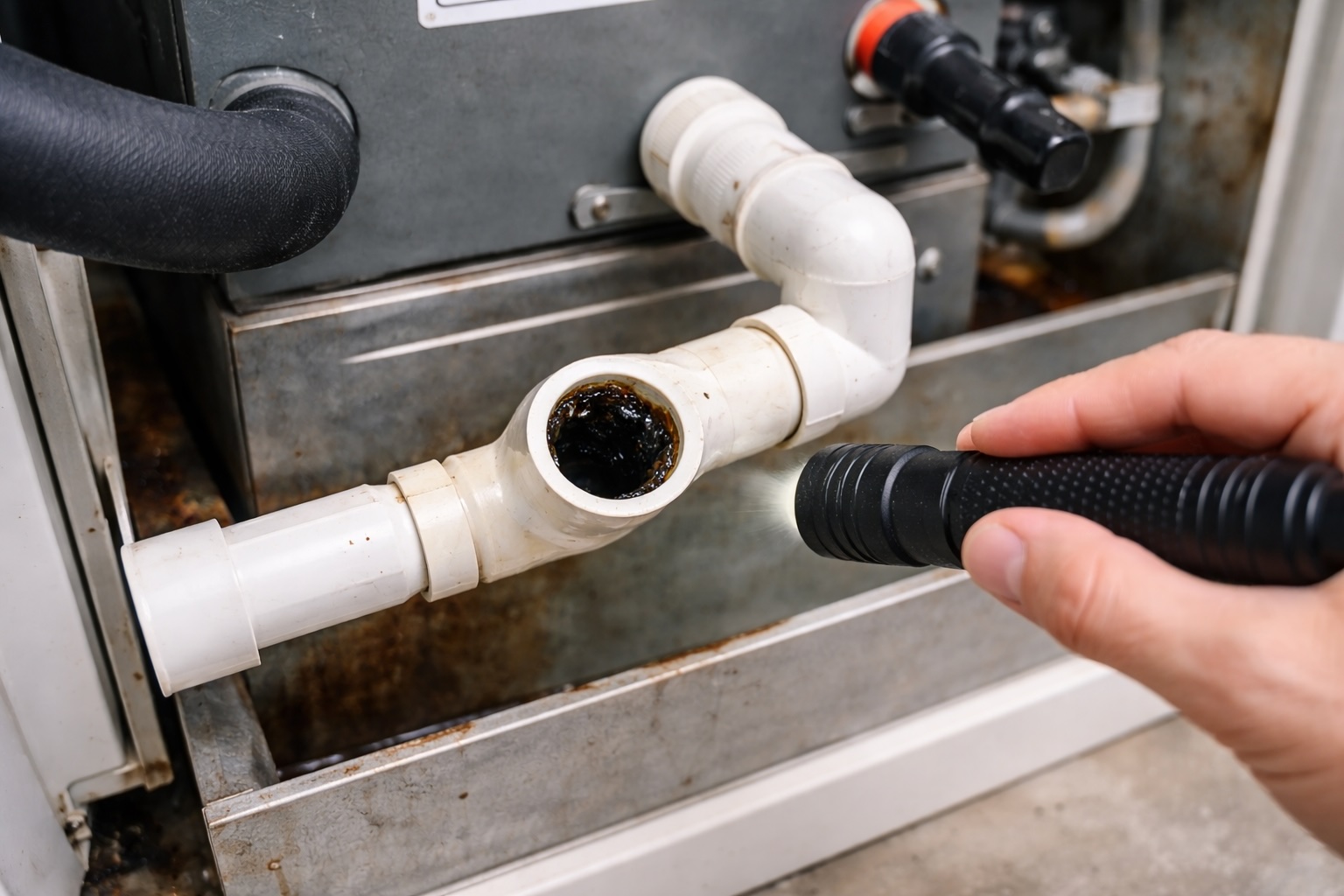
In South Florida’s warm, dark, wet environment inside that drain line, algae grows enthusiastically. The combination of constant moisture, darkness, and perfect temperatures creates ideal conditions. Algae forms a slimy biofilm that gradually narrows the pipe’s interior diameter.
Dust and debris from your home’s air also contribute. Even with regular filter changes, some particulates make it past and into the condensation pan. These particles wash into the drain line where they stick to the algae biofilm, accelerating clogs.
The buildup happens slowly during months of light use. By April, you might have a drain line that’s 30-40% restricted but still flows adequately. Come June when condensation triples, that restricted line can’t keep up.
We respond to these calls constantly during summer. The pattern is always similar: homeowner noticed their AC wasn’t cooling well, saw water stains spreading on ceilings, or smelled mold in the AC closet. Investigation reveals a completely clogged drain line and significant water damage developing for weeks.
Warning Signs You Can Check Right Now
Walk to your AC air handler location and look for these indicators. The air handler is typically in a closet, attic, or garage, wherever you see the large metal box connecting to your ductwork.
Check the area around the air handler for water stains on walls, ceiling, or floor. Even old dried stains indicate previous overflow events that could happen again. Rust on the air handler cabinet or nearby metal components suggests moisture exposure.
Look at the condensate drain pan if you can access it. Standing water in the pan when the system isn’t actively running indicates drainage problems. The pan should be empty except when the AC is actively producing condensation.
Locate where your condensate drain line exits your home and watch it next time your AC runs. You should see water dripping or flowing from the pipe. If the AC runs for 20-30 minutes without producing discharge, your drain line may be clogged.
Musty odors near the air handler or from AC vents suggest mold growth from moisture problems. If your AC isn’t cooling effectively, a clogged drain might be the culprit. Many modern systems have safety switches that reduce cooling or shut down completely when drain pans fill with water.
Simple DIY Maintenance Steps
Locate the access port on your drain line, typically a PVC tee fitting with a removable cap near the air handler. Remove the cap and look inside with a flashlight. The pipe should be clear; if you see standing water or dark buildup, the line needs cleaning.
Pour a cup of white vinegar down the access port. The acidic solution helps dissolve algae buildup. Let it sit for 30 minutes, then flush with a gallon of clean water. Repeat this monthly during cooling season.
For more thorough cleaning, use a wet-dry vacuum at the drain line’s outdoor exit point. Create a seal around the pipe opening with a rag and apply suction for a few minutes. This often dislodges clogs and pulls debris out. You’ll know you’ve succeeded when you see algae or sludge come out in the vacuum.
Check and replace your air filter monthly during heavy-use months. A dirty filter allows more dust to pass, which eventually contributes to drain clogs.
When to Call Professionals
If you’ve attempted DIY cleaning but water still isn’t draining properly, the clog may be deep in the line or the pipe may have damage you can’t see. HVAC technicians have specialized tools that clear stubborn clogs.
Recurring clogs despite regular maintenance suggest underlying problems. The drain line might have improper slope, or your system might be producing excessive condensation due to dirty coils or refrigerant issues.
If you see mold growth inside your air handler or around the condensate pan, don’t just clean what you can see. Mold often extends into areas you can’t access, including inside ductwork. Professional assessment determines the extent of growth.
Water damage to ceilings or walls from previous overflows needs proper evaluation. What looks like a small stain might indicate extensive hidden moisture. We use moisture meters and thermal imaging to map the full extent of water intrusion.
Preventing Summer Mold Problems
The mold growth we deal with in summer often starts with spring AC neglect. A clogged drain that overflows in June creates moisture conditions perfect for mold establishment. By July, homeowners notice musty smells. By August, visible growth appears on walls near the AC closet.
Mold remediation at that point involves removing mold-contaminated drywall, treating affected framing, addressing soaked insulation, and often discovering that mold has spread into adjacent wall cavities.
The cost difference is dramatic. Drain cleaning might cost $100-200 professionally, or nothing if you do it yourself. Mold remediation from AC overflow typically runs $3,000-8,000 depending on extent.
More importantly, preventing the problem means avoiding the disruption of remediation work in your home, the stress of insurance claims, and health concerns from mold exposure.
Make April Count
Your AC system is about to work harder than it has in six months. The condensate drain line that’s been handling light duty all winter will soon face maximum demand. Small problems that don’t matter now will matter tremendously in six weeks.
Take an hour this month to inspect your system, clean your drain line, and address any warning signs. If you’re not comfortable with DIY maintenance, schedule professional AC service now before the summer rush makes getting appointments difficult.
The effort you invest in April prevents the emergency calls we receive all summer from homeowners dealing with flooded AC closets and mold problems.
Noticed signs of AC drain problems or discovered water damage around your air handler? J&R Restoration provides professional assessment and restoration services throughout Palm Beach and Broward Counties.