TL;DR: Mold clearance testing is the independent verification step that proves remediation actually worked. Without it, a homeowner has no defensible evidence the home is safe.
Mold clearance testing is the independent post-remediation inspection and laboratory analysis that confirms a mold remediation project has returned the affected area to a normal fungal ecology. It is performed by a third-party indoor air quality professional working alongside the mold remediation contractor, and it produces a written report that becomes the homeowner’s evidence of a clean outcome. Skipping clearance testing is one of the most common reasons that a remediation looks finished but the same musty smell, the same allergy symptoms, and eventually the same visible regrowth come back within months. For South Florida homeowners dealing with mold from a leak, a storm, or a long-term humidity problem, understanding what clearance testing actually proves (and what it does not) is the difference between paying for a remediation and paying for the same remediation twice.What Clearance Testing Is, and What It Is Not
Clearance testing has two distinct parts. The first is a visual inspection of the work area, the containment, and the surrounding rooms by a qualified inspector with no financial relationship to the remediation contractor. The inspector confirms that visible mold has been removed, the affected materials have been replaced or properly cleaned, the moisture source that caused the mold has been corrected, and the containment was maintained throughout the project. The second is air sampling and, in some cases, surface sampling, with the samples sent to an accredited laboratory for spore identification and quantification. What clearance testing is not: it is not a contractor inspecting their own work, it is not a promise that mold will never return, and it is not a guarantee against future moisture intrusion. It is a snapshot of the indoor environment at the moment of testing, and the value of that snapshot depends entirely on the independence of the tester and the quality of the laboratory analysis.Why South Florida Mold Clearance Has Higher Stakes
The South Florida indoor environment is unusually challenging for mold remediation. Outdoor humidity averages above sixty percent for much of the year, ambient outdoor spore counts are elevated by the subtropical climate, and the daily indoor-outdoor moisture exchange through air conditioning systems means that even a well-remediated room receives a steady inflow of background mold spores. A remediation that would pass clearance easily in a drier climate may need additional care here to produce comparable results. The CDC’s guidance on mold in homes, available at the agency’s official mold health information page, emphasizes that the elimination of visible growth and the correction of the moisture source are the two non-negotiables, and that ongoing humidity control is what prevents recurrence. Clearance testing verifies the first two; humidity control after the project is the homeowner’s responsibility going forward.What the Air Samples Actually Measure
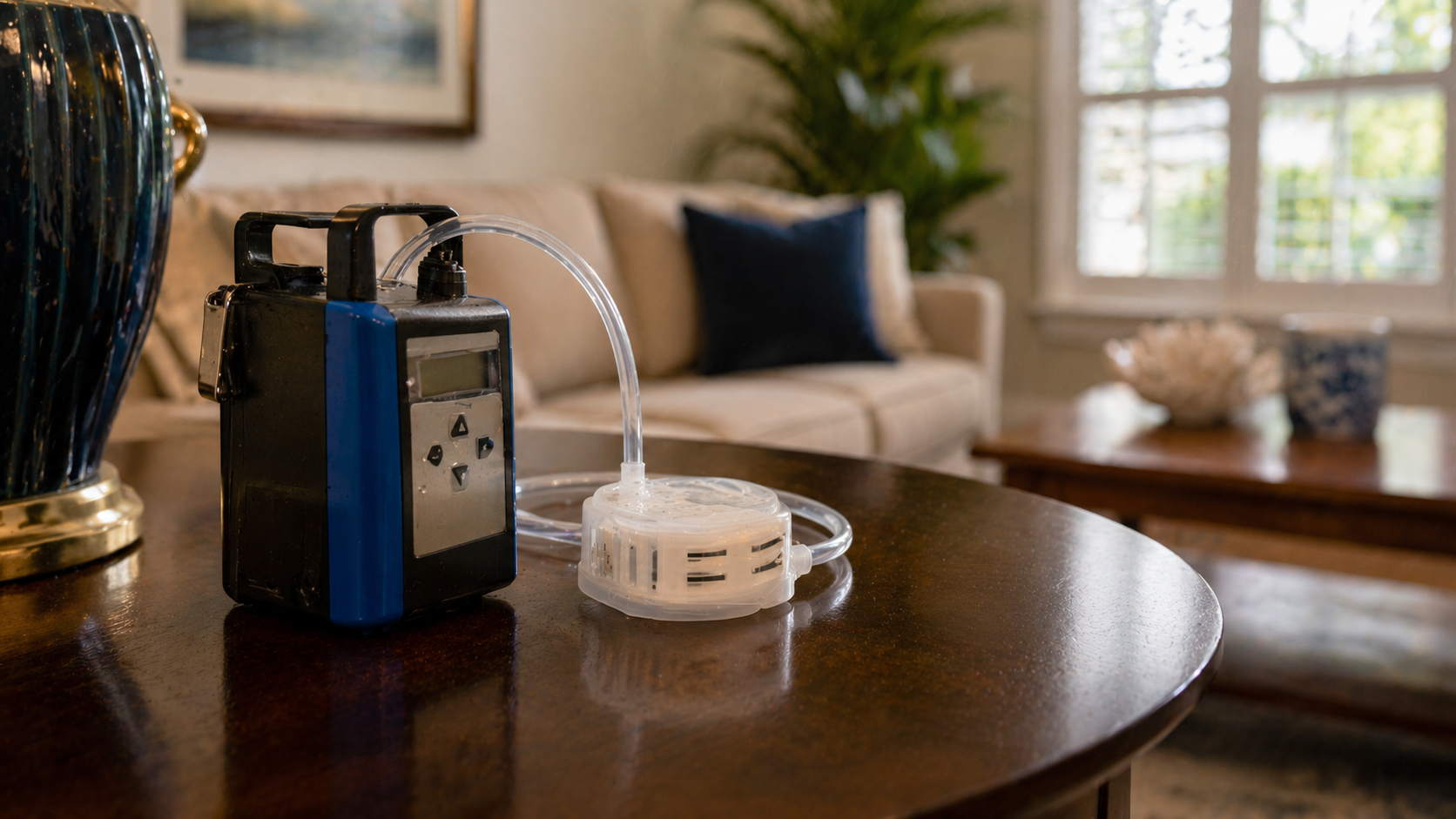
The lab analyzes the samples and reports two key data points. The first is total spore count per cubic meter of air, often broken down by genus (Aspergillus, Penicillium, Cladosporium, Stachybotrys, and others). The second is the ratio of indoor spore counts to a simultaneously collected outdoor baseline sample. A clean post-remediation result is one where the indoor count is at or below the outdoor count for the area, with no problematic indoor species elevated above background. The outdoor baseline matters enormously. A South Florida day with high outdoor spore activity will produce indoor numbers that look higher than the same day in a drier climate, but the relative comparison is what tells the story. A reading of fifteen hundred spores per cubic meter inside is not inherently bad if the outdoor reading the same hour is three thousand. The same indoor reading would be a clear failure if outdoor was four hundred. Reading clearance reports without understanding the outdoor baseline is one of the most common ways homeowners misinterpret what they are looking at.
The Most Common Reasons Remediations Fail Clearance
Five patterns produce most clearance failures in our service area. The first is incomplete containment. Plastic sheeting that gaped at a doorway during work allowed cross-contamination of the surrounding rooms with elevated spore counts. The remediated zone is clean; the rooms around it are not. The second is missed moisture source. The visible mold was removed, but the underlying leak, condensation point, or humidity problem was not corrected. Spore counts at clearance time may still pass, but the regrowth that follows in weeks tells the real story. The third is insufficient HEPA air scrubbing during the project. Negative-pressure HEPA filtration is what keeps airborne spores from settling on every surface during demolition. Inadequate scrubbing leaves a settled-spore burden on furniture, carpets, and HVAC components that re-suspend into the air long after the contractor leaves. The fourth is HVAC contamination. Air-handling components draw spores during the project and seed them throughout the home every time the system runs. Without ductwork inspection and air-handler cleaning, the clearance fails or it passes today and fails again next week as the system redistributes spores. The fifth is contaminated cleanup. Tools, equipment, and the contractor’s own clothing carry spores between job sites. Reputable contractors decontaminate between projects; some do not. When clearance fails for inexplicable reasons in a job that visually looks complete, cross-site contamination is the explanation more often than homeowners realize, and avoiding it is part of what separates serious mold remediation from a quick visual cleanup.How to Read a Clearance Report
A complete clearance report should include the date and time of sampling, the outdoor temperature and humidity, the sampling method and equipment used, the indoor and outdoor spore counts broken out by genus, the laboratory accreditation, and a written interpretation by the inspector. The interpretation is critical. A report that lists numbers without explanation is not a clearance, it is a data sheet. The interpretation should state whether the project passed, why or why not, what (if anything) needs additional work, and what the recommended re-test interval is if the project passed conditionally. Homeowners reviewing a clearance report should look for three signals of a strong outcome: indoor counts at or below the outdoor baseline; no Stachybotrys, Chaetomium, or other water-damage indicator species elevated above background; and a clean visual inspection of the work area with no remaining moisture readings above the dry-standard threshold in the wall cavities and substrate materials.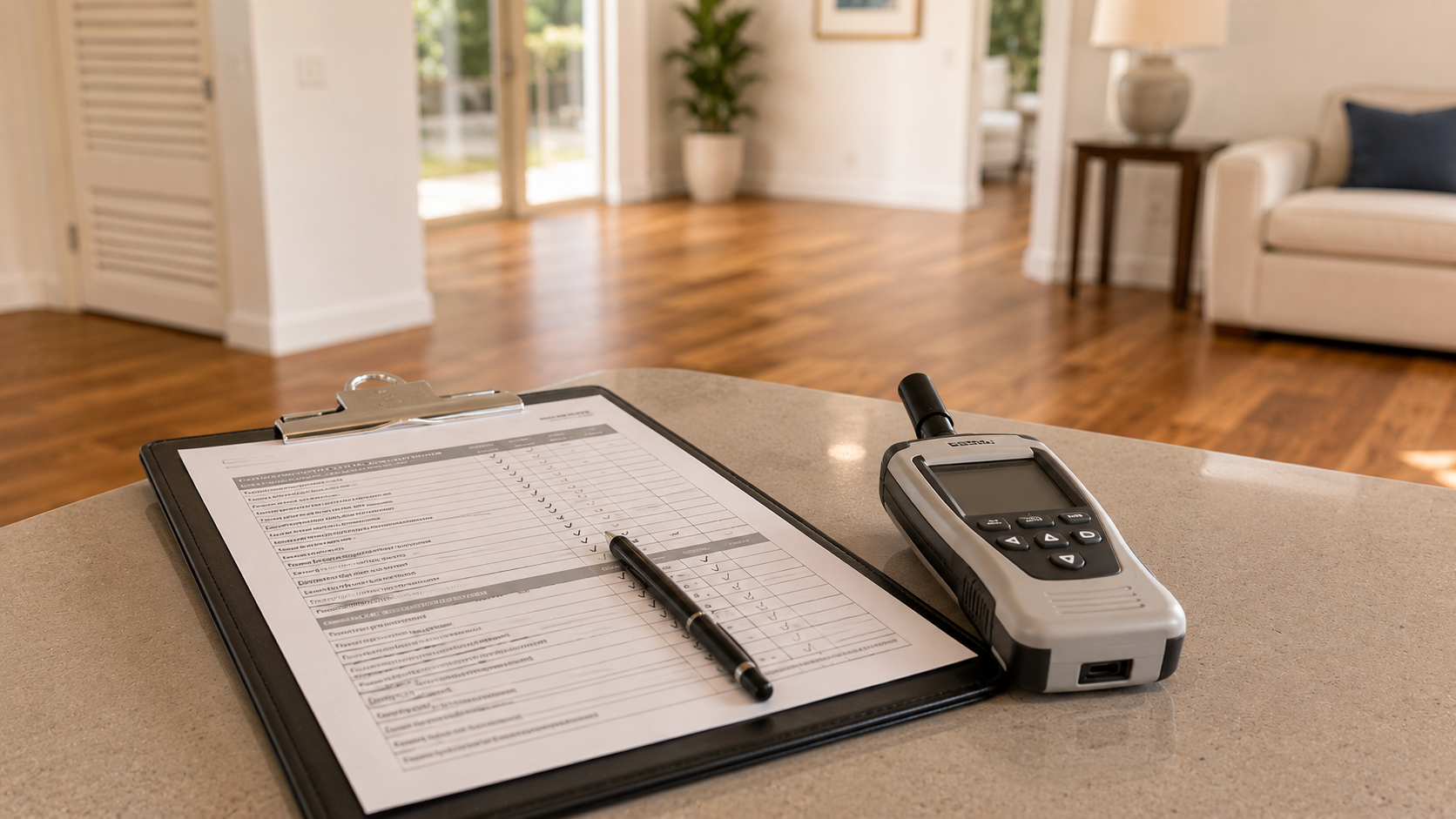
When to Test, Who to Call, and What It Costs
Clearance testing happens after the remediation is finished, the materials are dry, and any reconstruction has been completed back to a paintable surface. Testing before reconstruction is a separate post-remediation verification step and produces different results. For homeowners working with our mold restoration team, clearance testing is a recommendation we make routinely and we work with an independent indoor air quality firm to perform the analysis, which preserves the third-party independence that gives the clearance its evidentiary value. Costs vary by home size, the number of sampling locations required, and the laboratory turnaround time. A typical residential clearance in South Florida runs in the high hundreds to low thousands of dollars. Compared to the cost of a failed remediation, the investment is small. For homeowners selling, buying, or refinancing a home with a documented mold history, the clearance report becomes a meaningful asset in the transaction. If you are wrapping up a mold remediation project, planning one, or trying to verify that a previous project actually worked, schedule a free assessment and we will walk through the testing plan, the timing, and what a passing result needs to look like for your specific situation.Frequently Asked Questions
Who should perform mold clearance testing?
An independent indoor air quality consultant or industrial hygienist with no financial relationship to the remediation contractor. Testing performed by the contractor who did the work has no evidentiary value because the conflict of interest is built in. Reputable remediation companies recommend independent clearance specifically to protect the homeowner.How long after remediation should clearance testing happen?
After the work is finished, the materials are dry to standard, and any rebuild is complete back to a paintable surface. This is typically a few days to two weeks after the active remediation, depending on drying time and reconstruction scope. Testing too early may produce false negatives from residual airborne spores still settling.What does a passing clearance result look like?
Indoor airborne spore counts at or below the outdoor baseline taken at the same time, no water-damage indicator species (such as Stachybotrys or Chaetomium) elevated above background, and a clean visual inspection with dry substrate readings throughout the work area. The written interpretation should explicitly state the project passed.Can a mold remediation pass clearance and still have problems later?
Yes, if the moisture source was not corrected. Clearance verifies that the visible mold and the airborne spore burden at the moment of testing have been addressed. It cannot verify that humidity control, leak repair, or HVAC moisture management will hold up over time. Recurrent moisture brings recurrent mold, regardless of the original clearance result.
How much does mold clearance testing cost in South Florida?
A typical residential clearance ranges from several hundred dollars to roughly two thousand dollars, depending on the size of the work area, the number of sampling locations, and laboratory turnaround time. The cost is a small fraction of the remediation itself and produces documentation that protects the homeowner in any future sale, insurance claim, or recurrence.
Do I need clearance testing for a small DIY mold cleanup?
For a small surface mold issue (less than about ten square feet) addressed by a homeowner without containment, formal clearance testing is usually not necessary, though it can be useful for peace of mind. For any project that involved containment, materials replacement, or remediation by a contractor, third-party clearance is the standard expectation in our experience and the homeowner’s best protection.