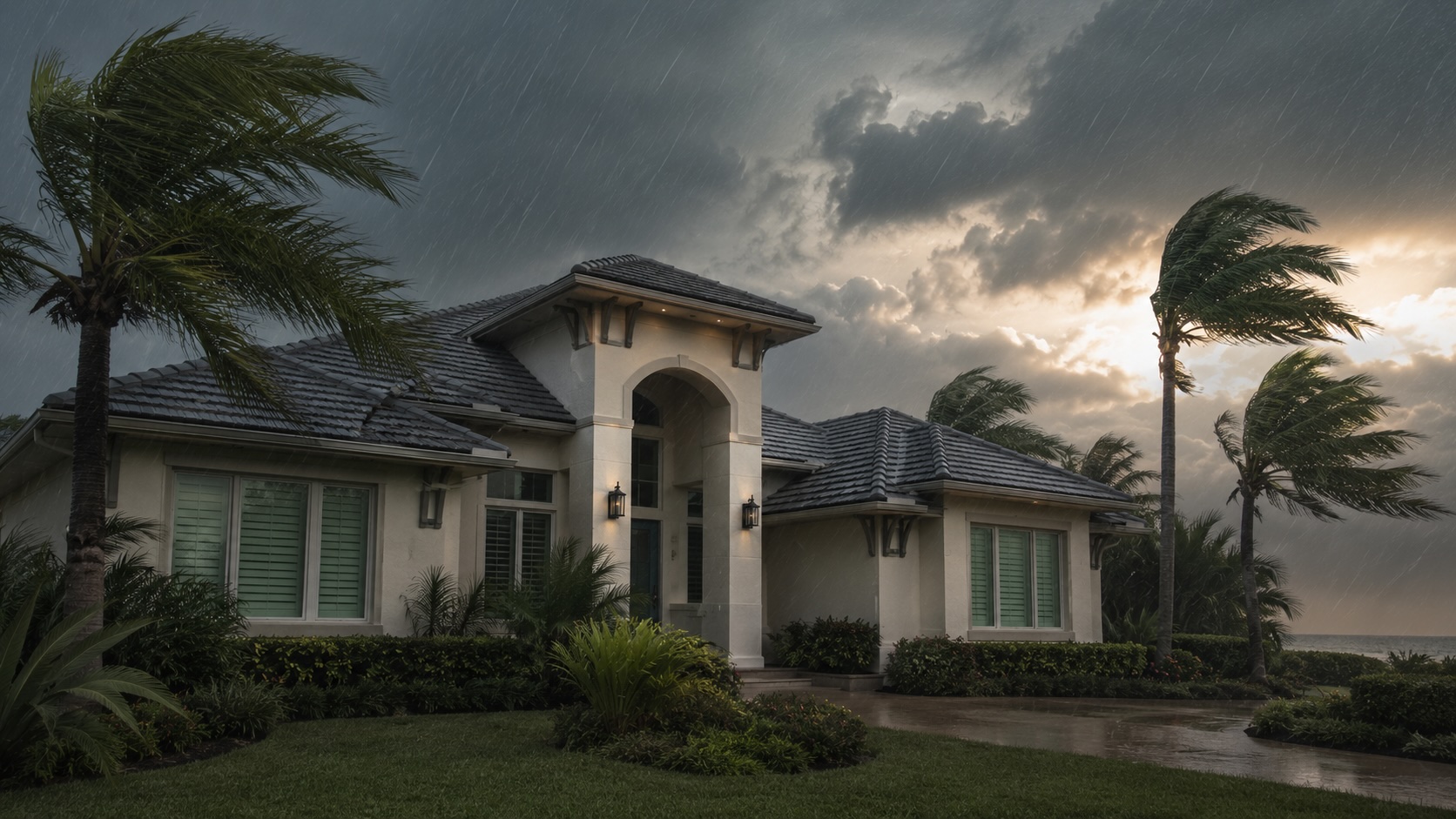
TL;DR: Wind-driven rain pushes water through window flashing failures that look fine from the outside, which is why Palm Beach water damage often shows up days after a storm passes.
Wind-driven rain is rain that is pushed horizontally by sustained wind, and in Palm Beach County it is the single most common cause of post-storm water damage that homeowners do not see coming. Unlike a roof leak that produces an obvious ceiling stain, wind-driven rain enters around window frames, door thresholds, and exterior penetrations that pass inspection in calm weather. The water tracks down inside the wall cavity, soaks the sill plate and the bottom of the drywall, and hides until a musty smell or a soft spot in the floor reveals what happened. By then, the storm is a week behind and the homeowner is convinced something else must have failed. Understanding how wind-driven rain actually enters the building is the first step in deciding which homes need attention before the next named system reaches the coast.
How Wind-Driven Rain Reaches the Inside of a Florida Home
In a typical rain event, water hits the roof and the walls vertically, and the home’s water management details (overhangs, drip edges, flashings, weep holes) divert it away from the building envelope. Wind-driven rain breaks the design assumption. Forty- and fifty-mile-per-hour gusts during a tropical system push water sideways at a pressure that overwhelms the small gaps designed only for vertical drainage. Three specific weaknesses turn into entry points.
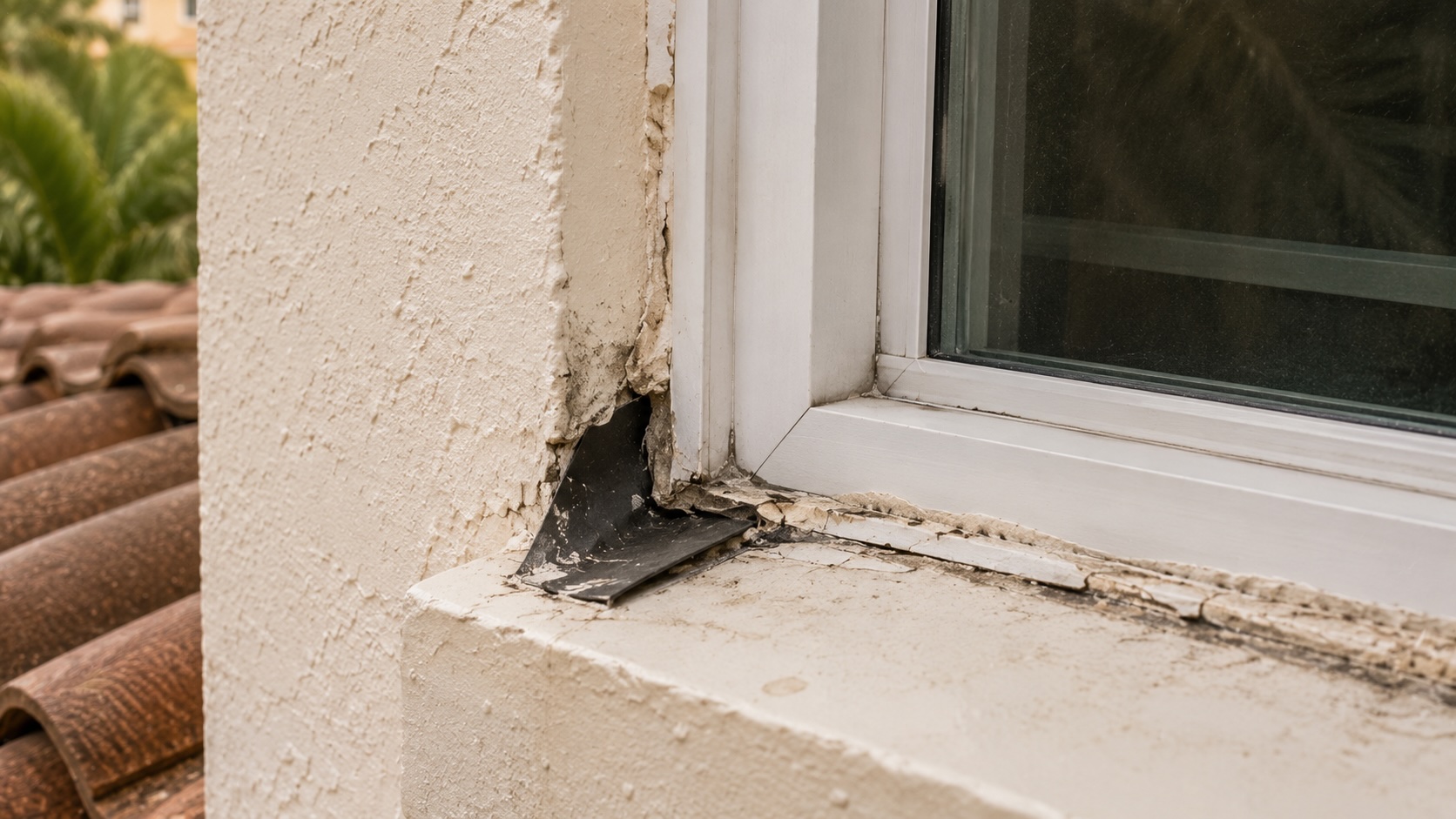
The first is window flashing. Most window installations in Palm Beach County include a flexible flashing membrane that overlaps the building wrap to direct water away from the rough opening. When that flashing was installed poorly, has degraded with age, or was disturbed during a window replacement, it no longer seals the bottom corner. Wind-driven rain pushes water past the trim, behind the stucco, and down into the wall cavity.
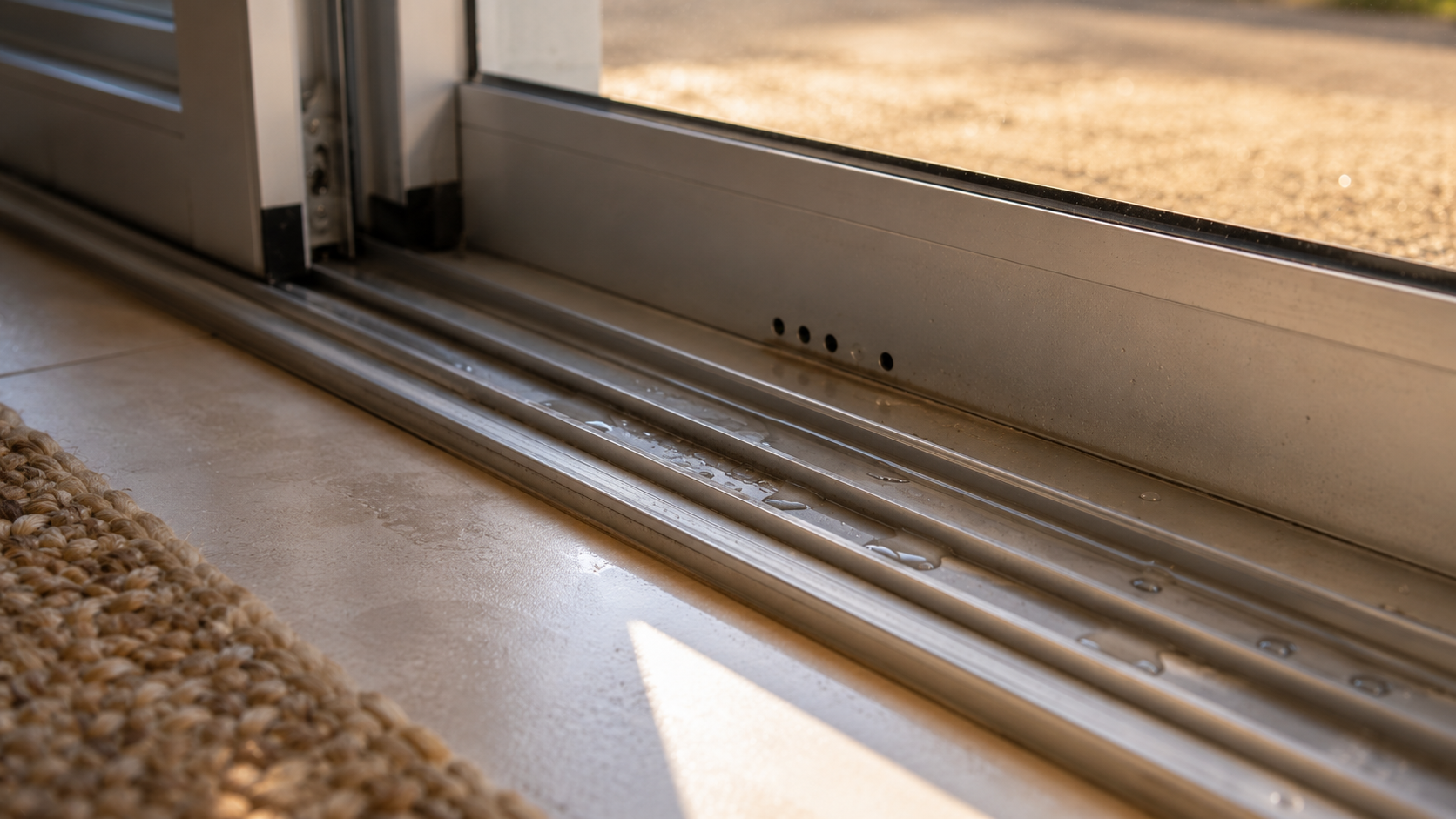
The second is the sliding-door track. Sliders are particularly vulnerable because the bottom track has weep holes designed to drain heavy rain, but those weep holes are often blocked by years of debris, salt deposits, or old caulk. When water cannot escape through the weep holes, it backs up and forces its way under the threshold into the floor below.
The third is wall penetrations: hose bibs, dryer vents, AC line sets, electrical service masts, and satellite dish mounts. Every penetration is a sealed joint. Every sealed joint is a candidate failure point under sustained wind. Caulk dries and cracks in Florida sun within five to seven years on average, and a hairline crack at a hose bib that survives a normal rain becomes a meaningful entry point during a storm.
Why the Damage Often Appears Days Later
Water that enters a wall cavity during a storm rarely produces immediate visible damage. The cavity insulates the drywall from the outside air, so the moisture does not evaporate. Instead it migrates downward along the bottom plate and laterally along the framing. The signs appear in a predictable sequence.
Within twenty-four hours, the smell of damp drywall develops in the affected room. Within two or three days, the lowest few inches of drywall begin to discolor or feel cool to the touch. By day four or five, the baseboard starts to swell slightly at the bottom edge, and the paint may bubble in a thin line just above the floor. By the end of the first week, mold spores have begun colonizing the wet paper face of the drywall and the soft wood of the sill plate, the point at which the project turns into mold removal rather than simple drying. The homeowner who walks through a week after the storm and sees nothing obvious is missing damage that is already underway behind the surface.
The Rooms Most at Risk in Palm Beach County Homes
Three room types carry disproportionate risk during wind-driven rain events. Living rooms and great rooms with large sliding-door walls facing east or southeast take the brunt of an Atlantic-side tropical system because the wind angle pushes rain straight at the slider track. Bedrooms with picture windows or transom windows over a working window are vulnerable when the upper sash has aged flashing that the homeowner cannot see from the ground. Bathrooms with a window over a tub are vulnerable because the tile and grout assembly already lives in a humid microclimate, and any additional water raises the moisture content of the wall enough to support fast mold growth.
Pool houses, cabanas, and garages also deserve attention. Their construction is often lighter than the main house, the flashing details receive less maintenance, and the rooms are checked less frequently after a storm. A leak that would be caught within hours in a primary bedroom can sit unnoticed in a pool house for a month, by which time the project shifts from drying to water damage cleanup and material replacement.
What to Do in the Forty-Eight Hours After a Storm
Wind-driven rain damage is one of those situations where speed of response makes a dramatic difference in eventual cost. The actions below take less than an hour for most homes and identify ninety percent of the damage that would otherwise be discovered weeks later.
Start with a walkthrough of every room that has an exterior window, sliding door, or door to a patio. At each opening, run your hand along the bottom of the trim, behind the baseboard if you can reach it, and across the floor for the first six inches from the wall. Look for any change in tone on the drywall or any softness in the texture of the wall. Smell the air close to the floor. Open the windows to look at the bottom edge of the sash and the weep holes in the frame. Step outside and confirm the exterior side of the same window is dry.
Document anything that looks suspicious with dated photos and contact a restoration professional immediately. The EPA’s guidance on indoor mold echoes this urgency. The agency’s Brief Guide to Mold, Moisture, and Your Home states plainly that drying water-damaged areas and items within 24 to 48 hours is the threshold for preventing mold growth. The point is not to panic, it is to know what you are looking at before it becomes a much larger problem.
When concealed moisture is suspected, a professional moisture survey using infrared imaging and pin-type meters can confirm what the eye cannot. The survey identifies which wall sections need to be opened, which can be dried in place, and which sections of flooring need to be addressed. Professional water removal and structural drying at this stage are targeted, fast, and far less invasive than waiting until visible damage forces a larger demolition scope.
Pre-Storm Prep That Reduces Wind-Driven Rain Damage
The window for prevention closes when the first outer band of a system reaches the coast. Before that, three actions meaningfully reduce risk. Clear the weep holes on every sliding door and window. A toothpick or thin wire removes the buildup that prevents the drain channels from doing their job. Inspect and refresh exterior caulk at every wall penetration. Hose bibs, dryer vents, AC line sets, and meter penetrations should have intact, flexible sealant with no cracks. Verify that storm shutters or impact glass are deployable and that the gasket on each shutter still seals tightly to the frame.
Inside, place absorbent towels at the base of vulnerable windows and sliders before the storm. These do not prevent water from entering, but they capture the first wave and slow the migration into the wall cavity by hours, which is often enough time for a homeowner to identify and address the entry point before the wall plates take on water.
Pre-storm assessments and post-storm response are part of what we handle for Palm Beach County homeowners every named storm season. The combination of fast on-site moisture surveys, targeted drying, and follow-up mold monitoring is what keeps wind-driven rain incidents from turning into reconstruction projects. If a storm has already passed and you are unsure where to start, our 24/7 restoration company is the call to make in the first 48 hours.
Frequently Asked Questions
How can wind-driven rain enter a house that passes regular inspection?
Regular inspections check that water management details work under normal vertical rainfall. Wind-driven rain pushes water horizontally at pressures regular inspections do not test for. Aged flashing, blocked weep holes, and cracked exterior caulk all pass a calm-weather inspection but fail under sustained tropical-system winds.
What is the most common entry point for wind-driven rain in Palm Beach homes?
Sliding-door tracks with blocked weep holes account for a large share of post-storm water damage calls in single-family Palm Beach County homes. The track design relies on weep holes to drain heavy rain, and once they clog with debris or old caulk, the next sustained storm event pushes water under the threshold into the room.
How long after a storm should I check for wind-driven rain damage?
Within forty-eight hours of the storm passing. Earlier is better. Visible signs (discolored drywall, swelling baseboards, musty smell) typically appear between three and seven days after entry, by which time mold colonization has begun in the wet cavity. Catching the moisture before visible signs appear is the difference between fast drying and a remediation event.
Does my homeowner’s insurance cover wind-driven rain damage in Florida?
Coverage depends on the policy. Many Florida policies cover wind-driven rain damage only when the wind has first created an opening in the building envelope (a missing shingle, a broken window, a separated soffit). Damage from entry points that already existed before the storm is often excluded as a maintenance issue. Document everything and review the policy with the carrier as soon as you suspect damage.
Can I dry wet drywall myself after a wind-driven rain event?
If the moisture is confined to surface dampness on the drywall face and you have caught it within twenty-four hours, a fan and a dehumidifier can sometimes finish the job. If the moisture is in the wall cavity, the bottom plate, or the insulation, professional drying with industrial equipment is the difference between a clean recovery and a mold remediation in two to three weeks.
What is the connection between wind-driven rain and mold?
Mold spores require moisture, food (drywall paper, cellulose insulation, wood framing), and time. Wind-driven rain delivers the moisture. The wet wall cavity provides everything else. Mold visibly colonizes the wet paper face of drywall in three to five days at South Florida temperatures. Drying the cavity within forty-eight hours of the moisture event is the single most effective mold prevention step.