What South Florida Homeowners Need to Understand About Coverage, Cleanup, and Claims
When your home takes on water, whether it’s from a sudden storm or a burst pipe, the last thing on your mind is what to call it. But when it comes to your insurance policy, there’s a big difference between flood damage and water damage, and knowing that distinction could determine whether your claim gets approved or denied.
If you live in South Florida, understanding these terms isn’t just helpful. It’s essential.
What Counts as Flood Damage?
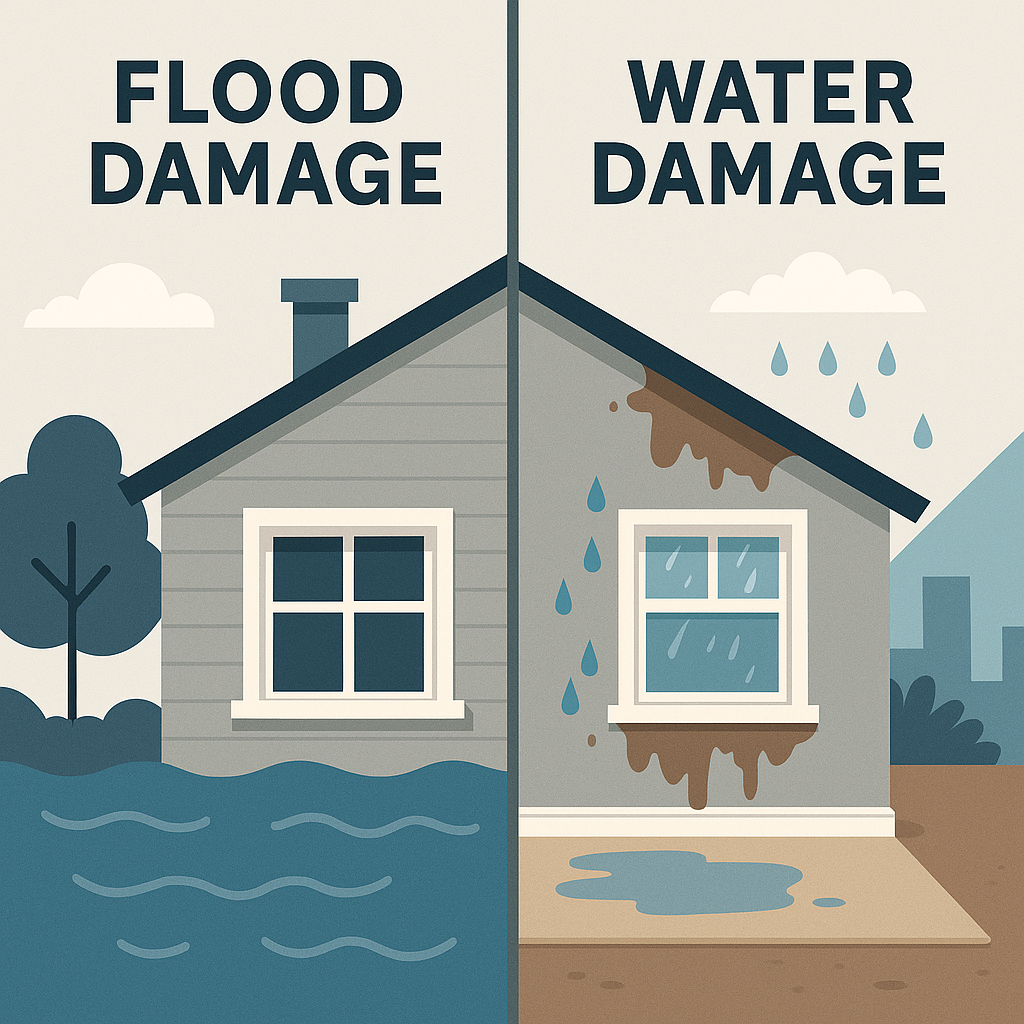
According to FEMA, flood damage refers to water that comes from outside your home and affects at least two properties or two acres of land. That includes:
- Rising water from heavy rainfall
- Storm surge or ocean flooding
- Overflowing canals or rivers
- Flash floods or surface water from streets
Flood damage typically happens at ground level or lower, seeping through doors, windows, or foundation cracks.
FEMA defines a flood as “an excess of water on land that is normally dry” affecting two or more properties.
What Is Water Damage?
Water damage, on the other hand, happens when water comes from inside your home or plumbing systems, such as:
- Burst pipes or water heater failures
- Leaky appliances like washing machines or dishwashers
- Overflowing bathtubs, sinks, or toilets
- Roof leaks or window leaks during rainstorms
Water damage is often sudden, isolated, and affects one property, which makes it typically covered under standard homeowners insurance.
Flood Damage vs. Water Damage: Why the Difference Matters for Insurance Claims
Water Damage
- Often covered under a standard homeowners policy
- Requires prompt reporting and documentation
- Usually has limitations on mold coverage unless addressed quickly
Flood Damage
- Not covered under most homeowners policies
- Requires a separate flood insurance policy through FEMA or a private insurer
- Claims are subject to stricter documentation and deductibles
If you report flood damage as “water damage,” your claim could be denied outright. And if you don’t have flood insurance, you may be responsible for cleanup and repairs yourself.
How to Tell Which One You Have
The source of the water matters more than how much water there is. Ask yourself:
- Did the water come from outside the home (like rain, rising groundwater, or storm runoff)?
- Or did it come from a broken appliance, pipe, or leak inside?
In South Florida, these situations can sometimes blur together, especially during hurricane season. A leaking roof during a storm might seem like flood damage, but it’s usually classified as water damage, as long as the leak wasn’t caused by rising water.
What to Do Immediately After Water or Flood Damage
Regardless of the source, fast action is critical. Here’s what to do:
- Stop the source (if possible) and turn off electricity to affected areas
- Take photos and videos of all damage before cleanup begins
- Contact your insurance provider and explain where the water came from
- Call a licensed water damage restoration company like to begin mitigation and document everything professionally
Why Homeowners in South Florida Should Be Extra Prepared
With our proximity to the ocean, low elevation, and year-round humidity, homes in South Florida are especially vulnerable to both flood and water damage. The good news is that fast, expert help is available, and that early action can often make the difference between a full rebuild and a fast recovery.
At J&R Restoration, we work with both standard homeowners insurance and flood insurance claims, helping guide you through every step with clarity and care.
Need Help Understanding Your Coverage? Start With the Right Cleanup
If you’re facing unexpected water damage or flooding, don’t guess your way through it. Our team can help assess the source, document the damage correctly, and handle cleanup from start to finish… whether it’s a soaked carpet or an entire first floor under water.