March marks a turning point in South Florida’s climate. Winter’s relatively dry conditions give way to rising temperatures and increasing humidity, creating the perfect storm for mold growth. After spending 18+ years helping Palm Beach and Broward County homeowners deal with mold problems, we’ve noticed a clear pattern: the calls start increasing in March and don’t slow down until late fall.
Understanding why mold becomes more active in spring and knowing what to look for can help you catch problems early, before they become expensive remediation projects.
Why March Triggers Mold Growth in South Florida
Florida’s mold season essentially runs from early spring through mid-fall, with March serving as the starting gun. During winter, our humidity levels drop to their lowest point of the year, typically hovering around 60-65%. Your home stays relatively dry, and mold growth slows considerably.
Then March arrives. Temperatures climb from the comfortable 70s into the 80s. Humidity surges back above 70%, where it will stay through October. Morning dew appears on windows and outdoor surfaces. The air feels thick again. This combination of warmth and moisture is exactly what mold spores need to germinate and spread.
The transition period is particularly tricky. Your home spent months in relatively dry conditions, and you’ve probably gotten comfortable with how things feel. Then suddenly, that bathroom that was fine all winter starts smelling musty. The corner of your bedroom ceiling develops a small discolored spot. The AC closet has a damp smell you don’t remember from last month.
These aren’t coincidences. They’re signs that mold has recognized favorable conditions and started growing again.
Where Mold Appears First in Spring
Mold doesn’t attack your entire home at once. It targets specific vulnerable areas where moisture accumulates easily. Knowing where to look helps you catch growth early, ideally before it spreads or causes health symptoms.
Bathrooms top the list, especially guest bathrooms that don’t get used daily. Without regular ventilation from shower steam and exhaust fan use, these spaces trap humidity. Check behind toilets, in shower corners, around tub caulking, and on ceiling areas near exhaust fans. Black or greenish specks indicate active growth.
Air conditioning closets and utility rooms often develop mold during the spring transition. Your AC hasn’t been running hard yet, so condensation from the system isn’t being managed as aggressively. Meanwhile, these small, enclosed spaces trap humidity. Look around the air handler, near condensate drain lines, and on walls adjacent to the unit.
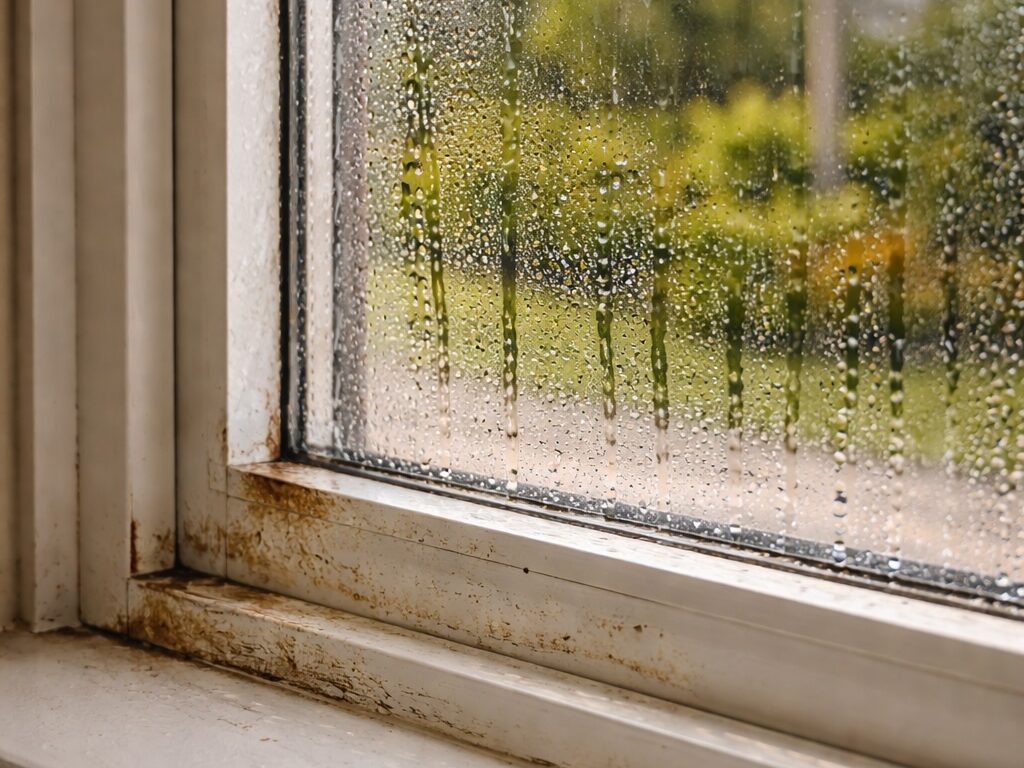
Window frames and sills collect condensation during spring mornings when warm, humid outdoor air meets cooler glass. This moisture creates perfect conditions for mold on window trim, particularly on north-facing windows that don’t get direct sunlight to dry things out. Wooden window frames are especially vulnerable.
Closets, particularly those on exterior walls, can surprise homeowners in spring. These spaces lack air circulation, and humidity from the outside penetrates through the walls. Mold grows on shoes, leather goods, hanging clothes, and the walls themselves. That musty smell when you open a closet door isn’t just staleness; it’s often mold releasing spores.
Attics in South Florida homes accumulate heat and moisture during spring. Roof leaks that seemed minor during dry winter months suddenly become significant as spring rains increase. Poor attic ventilation traps humid air against roof decking, insulation, and rafters. Check for water stains on roof decking, damp insulation, or musty smells when accessing attic spaces.
Early Warning Signs Beyond Visible Growth
Most homeowners wait until they see mold before taking action, but your nose and body often detect problems earlier than your eyes. Learning to recognize these early warnings can save you significant money and hassle.
Musty odors are the most reliable early indicator. Mold releases volatile organic compounds (VOCs) that create that characteristic damp, earthy smell. If a room, closet, or area of your home suddenly smells musty this spring when it didn’t during winter, investigate immediately. The smell means mold is actively growing somewhere, even if you can’t see it yet.
Health symptoms that improve when you leave home and worsen when you return suggest mold exposure. Increased allergy symptoms, morning congestion, persistent coughing, itchy eyes, or headaches that coincide with spring’s arrival might not be seasonal allergies. Rather, they could be your body reacting to mold spores in your home.
Condensation on windows, walls, or pipes indicates humidity levels high enough to support mold growth. If you’re seeing water droplets or foggy windows in the morning, your indoor humidity has climbed too high. Mold will follow if you don’t address the moisture.
Peeling paint or bubbling wallpaper suggests moisture has penetrated your walls. This hidden moisture feeds mold growth behind the surfaces you can see. Don’t ignore these signs just because you don’t see mold yet, as it’s almost certainly growing behind the damaged areas.
Simple Prevention Steps for Spring
Preventing mold during spring’s humidity surge doesn’t require expensive equipment or major home modifications. A few proactive steps significantly reduce your risk.
Run your air conditioning even when you don’t feel hot. AC systems don’t just cool air… they remove moisture. During March and April, when temperatures hover in the comfortable range, many homeowners avoid running AC to save money. This allows indoor humidity to climb unchecked. Set your thermostat to maintain comfortable temperature, which forces the system to run enough to control humidity.
Use exhaust fans religiously in bathrooms and kitchens. Every shower should involve turning on the exhaust fan before you start and leaving it running for 20 minutes after you finish. Cooking generates surprising amounts of moisture, so run kitchen exhaust fans while cooking and for 15 minutes afterward.
Increase air circulation in problem areas. Ceiling fans keep air moving, which prevents moisture from settling in corners and stagnant spaces. If you have rooms that tend to smell musty, leave interior doors open during the day to improve airflow. Consider adding small fans to closets that have a history of mold problems.
Monitor humidity levels with a simple hygrometer, available at any hardware store for $10-15. Indoor humidity should stay below 60% to prevent mold growth. If your readings consistently exceed this, you need either better AC operation or a dehumidifier in problem areas.
Address leaks immediately, no matter how minor they seem. That slow drip under the kitchen sink or the small ceiling stain from last month’s rain will become major mold problems once spring humidity arrives. Fix the source now, while conditions favor quick drying.
When DIY Prevention Isn’t Enough
You can handle a lot of spring mold prevention on your own, but certain situations need a different approach.
Size matters more than most homeowners realize. Once growth exceeds a few square feet, cleaning it yourself often makes things worse. Scrubbing large colonies releases millions of spores into the air, spreading contamination to rooms that were previously fine. At that point, you need containment systems and negative air pressure to prevent cross-contamination during removal.
Recurring growth tells you something’s wrong beyond the surface. If you’re cleaning the same spot repeatedly and mold keeps returning within weeks, hidden moisture is feeding that colony from behind the tile, inside the wall, or through a slow leak you can’t see. Thermal imaging and moisture meters can pinpoint these hidden sources.
Health symptoms that correlate with time spent at home deserve serious attention. Persistent coughing, morning congestion, or headaches that improve when you’re away and worsen when you return suggest exposure levels beyond what simple prevention can address.
HVAC system contamination requires specialized equipment. Once mold establishes itself in ductwork, your air conditioning becomes a spore distribution network every time it runs. The cleaning process involves accessing ductwork, treating surfaces properly, and determining why moisture accumulated in the system to begin with.
Stay Ahead of Spring Mold Season
March’s arrival means mold season has begun in South Florida. The combination of rising temperatures and increasing humidity creates perfect conditions for mold growth in homes that were fine all winter. By understanding where mold appears first, recognizing early warning signs, and taking simple preventive steps, you can keep small issues from becoming major problems.
The key is acting now, at the beginning of mold season, rather than waiting until prevention isn’t enough. Most spring mold issues respond well to the simple steps we’ve covered. A little attention in March saves a lot of hassle in June.
Noticed musty smells or early signs of mold in your South Florida home? At our South Florida restoration company, we help Palm Beach and Broward County homeowners stay ahead of mold season with professional assessment and effective solutions.