Picture this: You walk into your Boca Raton home after a weekend away and discover your kitchen floor covered in two inches of water from a burst pipe. Or maybe you’re dealing with the aftermath of a house fire in Wellington, staring at soot-covered walls and wondering where to even begin. In moments like these, many South Florida homeowners face a critical decision that could impact their recovery time, costs, and even their insurance coverage.
Should you call a restoration company or a general contractor? While both professionals work on homes, they serve vastly different purposes, especially when disaster strikes. Making the wrong choice could mean delayed recovery, voided insurance claims, or even health risks for your family. This guide will help you understand exactly who to call when time and safety matter most.
What Is a Restoration Company?
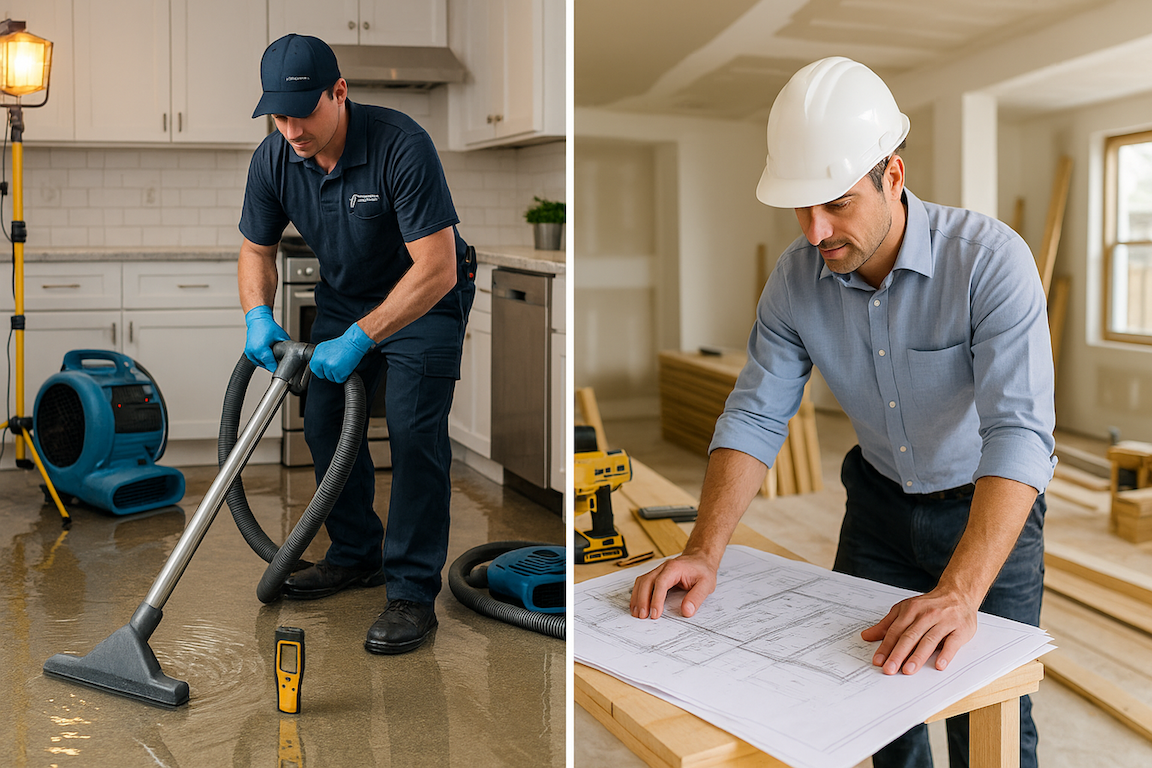
A restoration company specializes in emergency response and damage mitigation. Think of them as the first responders of the construction world. When disaster strikes your property, restoration professionals jump into action with specialized equipment, certifications, and techniques designed to stop further damage and begin the recovery process.
Restoration companies provide critical services including water extraction and structural drying, emergency board-ups and tarping, mold containment and remediation, fire and smoke cleanup, and content cleaning and restoration. What sets them apart is their IICRC (Institute of Inspection, Cleaning and Restoration Certification) training, which means they follow industry standards that insurance companies recognize and require.
In South Florida’s unique climate, restoration companies understand local challenges like hurricane-related flooding, persistent humidity that accelerates mold growth, air conditioning failures that cause water damage, and the urgent need to prevent secondary damage in our warm, moist environment. They’re equipped to respond 24/7 because water damage doesn’t wait for business hours, and mold can begin growing within 48 hours.
What Does a General Contractor Handle?
General contractors focus on construction, renovation, and remodeling projects. They’re the professionals you call when you want to update your kitchen, add a room, or renovate your bathroom. Their expertise lies in managing large-scale construction projects, obtaining permits and ensuring code compliance, coordinating multiple trades (plumbers, electricians, painters), and transforming spaces according to your vision.
However, general contractors typically work on planned projects rather than emergency situations. They may not have the specialized equipment needed for water extraction or the certifications required for mold remediation. Most importantly, they usually don’t operate as emergency services. If you call a contractor about your flooded basement on a Sunday night, you’ll likely reach voicemail.
While contractors are essential for the reconstruction phase after damage occurs, they’re not equipped to handle the immediate crisis that requires specialized knowledge of moisture detection, antimicrobial treatments, or proper containment procedures.
Emergency vs. Non-Emergency: Making the Right Call
Understanding the difference between emergency and non-emergency situations can save you thousands of dollars and protect your family’s health.
Call a Restoration Company Immediately For:
- Active water intrusion (burst pipes, roof leaks, flooding)
- Visible mold growth or musty odors
- Fire or smoke damage of any size
- Sewage backups or contaminated water
- Any situation requiring insurance documentation
- Structural damage that poses safety risks
A General Contractor Can Wait For:
- Planned renovations and upgrades
- Cosmetic repairs after restoration is complete
- Kitchen or bathroom remodeling projects
- Adding rooms or major construction
- Non-urgent maintenance issues
Timeline Breakdown: Restoration Phase (Days 1-7): Emergency mitigation, water extraction, initial cleanup, damage assessment, and insurance documentation. Reconstruction Phase (Weeks 2-8): Rebuilding, remodeling, cosmetic repairs, and final finishes.
Trying to skip the restoration phase or handle emergencies with the wrong professional can lead to bigger problems down the road, including mold growth, structural damage, and insurance claim denials.
When to Call a Restoration Company First
Certain situations demand immediate professional intervention. Water damage tops the list because it spreads quickly and creates ideal conditions for mold growth. In South Florida’s humidity, you have an even smaller window to act before secondary damage occurs.
Call a restoration company immediately if you notice standing water anywhere in your home, wet or sagging drywall and ceilings, electrical outlets or fixtures exposed to water, or sewage backup or contaminated floodwater. Mold situations also require specialized attention, especially visible mold growth on any surface, persistent musty odors that won’t go away, discoloration on walls, ceilings, or furniture, or family members experiencing unexplained respiratory issues.
Fire and smoke damage, regardless of size, needs professional attention. Even small fires can leave behind toxic residues that require specialized cleaning techniques. Smoke can penetrate porous materials and continue causing damage long after the flames are out.
The key is recognizing that these situations involve health and safety risks that go beyond simple repairs. Restoration companies have the training, equipment, and certifications to address these hazards properly.
The Insurance and Cost Factor
Here’s where many homeowners make costly mistakes: insurance companies have specific requirements for damage claims, and using the wrong type of professional can jeopardize your coverage.
Restoration companies understand insurance requirements and can provide proper documentation, work directly with insurance adjusters, follow industry standards that insurers recognize, and use certified procedures that protect your claim. They also maintain detailed photo documentation and moisture readings that insurance companies need to process claims efficiently.
In contrast, general contractors may not understand insurance requirements, might not have the certifications insurers expect, could inadvertently void your coverage by using improper techniques, and often lack the specialized equipment needed for proper assessment and documentation.
According to the Insurance Information Institute, water damage and freezing account for nearly 30% of homeowner insurance claims. Using a certified restoration company from the start protects your ability to recover these costs.
The difference in certifications matters too. IICRC-certified technicians follow specific protocols for different types of damage, while general contractors typically hold construction licenses that don’t cover emergency mitigation or specialized remediation techniques.
Can You Work with Both? The Seamless Transition Advantage
The best approach often involves both professionals, but timing and coordination matter. Smart homeowners use restoration companies for emergency mitigation and initial cleanup, then transition to reconstruction and remodeling once the property is properly dried and restored.
This is where companies like J&R Restoration offer a unique advantage. With both restoration capabilities and remodeling expertise, they provide a seamless transition from emergency response to beautiful renovation. Instead of juggling multiple contractors, coordinating schedules, and ensuring communication between teams, you get a single point of contact who understands your property from day one.
Consider this scenario: After fire damage in your Delray Beach home, a restoration-only company cleans up the damage and leaves. Then you hire a separate contractor for reconstruction, but they’re unfamiliar with the extent of the damage or the specific challenges of your property. With a company that handles both phases, the same team that performed the restoration understands exactly what needs to be rebuilt and can spot opportunities to upgrade during the process.
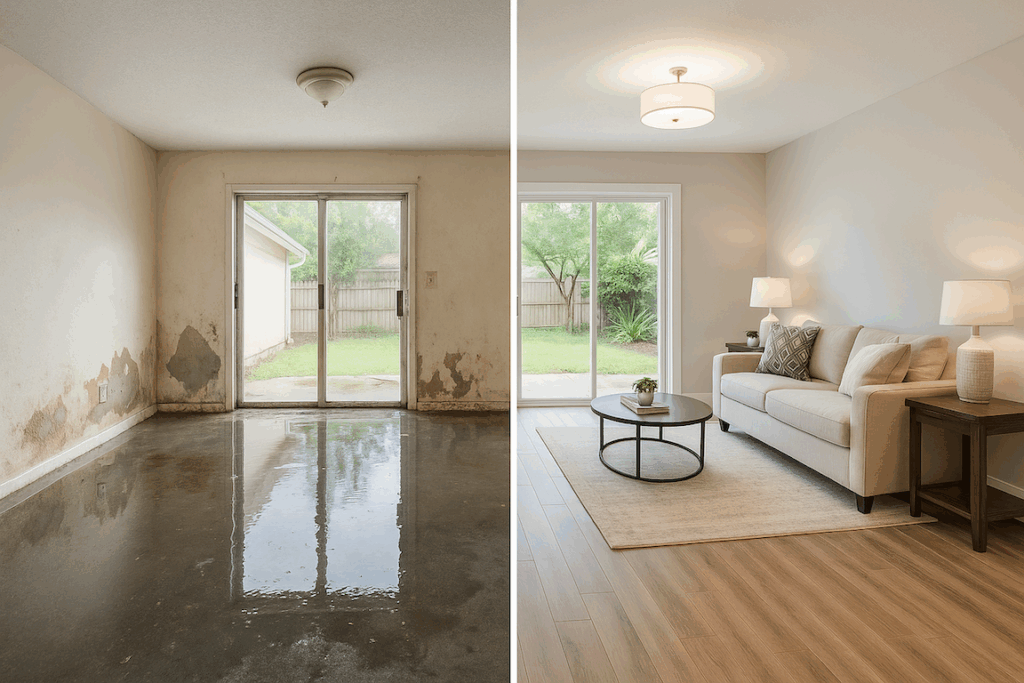
This approach often turns disaster into opportunity. Maybe that water-damaged bathroom gets beautiful new tile and fixtures. Perhaps fire damage becomes a chance to open up your floor plan or update your kitchen. When restoration flows seamlessly into remodeling, disasters can actually improve your home.
South Florida Property Damage: Local Triggers and Solutions
Living in South Florida means facing unique challenges that require local expertise. Each region has its specific risks and solutions.
In Palm Beach County, including Boca Raton and Delray Beach, hurricane season brings intense rainfall that can overwhelm flat roofs common in the area. Restoration companies familiar with local architecture understand how to address these vulnerabilities and prevent future issues. Wellington and Boynton Beach residents deal with additional challenges from older neighborhoods with aging electrical systems and coastal properties that face saltwater intrusion during storms.
Broward County presents its own set of challenges, particularly in older communities where electrical systems may not meet current standards, leading to fire risks. The county’s mix of high-rises and single-family homes requires different approaches to damage restoration.
Coastal areas throughout South Florida face unique mold challenges. Salt air, storm surge, and year-round humidity create perfect conditions for rapid mold growth. Local restoration companies understand these environmental factors and adjust their techniques accordingly. They know that standard drying times don’t apply in our climate and that certain materials commonly used in Florida construction require specialized treatment.
Seasonal considerations also matter. Hurricane season demands different preparation and response strategies than the drier winter months. Local restoration professionals understand these patterns and can provide guidance specific to our regional climate challenges.
Red Flags: Warning Signs You Chose the Wrong Professional
Not all professionals are created equal, and emergencies can bring out predatory contractors who take advantage of vulnerable homeowners.
Watch out for contractors who show up at your door unsolicited after a storm, demand full payment upfront before starting work, lack proper licensing or insurance documentation, or pressure you to sign contracts immediately. Other red flags include professionals who can’t provide references from recent jobs, quote prices significantly below other estimates, don’t have proper equipment for the job, or make promises that sound too good to be true.
For restoration work specifically, be wary of companies that can’t show IICRC certifications, don’t carry specialized insurance for restoration work, can’t provide 24/7 emergency response, or seem unfamiliar with insurance claim procedures.
Remember, legitimate restoration companies will provide detailed written estimates, show you their certifications, explain their process clearly, and give you time to review contracts unless it’s a true emergency requiring immediate action to prevent further damage.
How J&R Restoration Eliminates the Guesswork
With over 18 years of experience serving South Florida, J&R Restoration understands the confusion homeowners face when disaster strikes. That’s why we’ve built our business to eliminate the guesswork entirely.
When you call J&R, you’re getting IICRC-certified technicians who respond 24/7 to emergencies, licensed contractors who can handle both restoration and reconstruction, deep experience working with insurance companies to ensure proper claim handling, and local knowledge of South Florida’s unique challenges and building requirements.
What sets J&R apart is its comprehensive approach. We don’t just clean up damage and leave. Rather, we can take your property from disaster to beautiful, coordinating every step of the process so you’re not juggling multiple contractors or wondering what comes next. The team has seen it all in South Florida, from hurricane flooding to air conditioning failures, and knows how to turn these challenges into opportunities for improvement.
Being family-owned and operated for nearly two decades means we understand that your home isn’t just a building, it’s where your family’s memories are made. Every project is treated with the care and respect we would want for our own homes.
Frequently Asked Questions
Q: How quickly should I call a restoration company after water damage? A: Within the first few hours if possible, but definitely within 24 hours. Water damage spreads rapidly in South Florida’s humidity, and mold can begin growing within 48 hours. The sooner you act, the less damage you’ll face and the lower your restoration costs will be.
Q: Will my insurance cover restoration services? A: Most homeowner policies cover sudden, accidental damage when you use certified restoration professionals. However, using non-certified contractors or waiting too long to address damage may void your coverage. Always check with your insurance company and use IICRC-certified professionals.
Q: Can’t a general contractor handle water damage cleanup? A: General contractors aren’t equipped for emergency water extraction, don’t have specialized moisture detection equipment, and typically lack IICRC certifications that insurance companies require. They’re skilled at construction, but water damage requires specialized knowledge of drying science and contamination control.
Q: How much does restoration cost compared to hiring a contractor for repairs? A: Certified restoration often costs less than you think because insurance typically covers it when done properly. More importantly, professional restoration prevents secondary damage that would cost thousands more to fix later. Trying to save money by skipping proper restoration usually backfires.
Q: What’s the difference between restoration and reconstruction? A: Restoration stops ongoing damage and returns your property to its pre-loss condition using specialized equipment and techniques. Reconstruction comes after restoration is complete and involves rebuilding, remodeling, or upgrading damaged areas.
Q: Do restoration companies work nights and weekends? A: Reputable restoration companies like J&R offer 24/7 emergency response because disasters don’t follow business schedules. Water damage, fires, and storms can happen at any time, and immediate response is critical to preventing further damage.
Q: Should I get multiple quotes for emergency restoration work? A: While getting quotes makes sense for planned projects, emergencies require immediate action. Focus on finding a certified, licensed, and insured restoration company with good local reviews. Delaying response to shop around can lead to much more expensive damage.
Q: Can the same company handle both my emergency restoration and later remodeling? A: Yes, and this is often the best approach. Companies like J&R that offer both services provide seamless coordination from emergency response through beautiful reconstruction. You get consistency, better communication, and often better pricing.
Making the Right Call Protects Your Investment and Family
Understanding the difference between restoration companies and general contractors isn’t just about getting the right professional for the job. It’s about protecting your family’s safety, preserving your property value, and ensuring your insurance coverage remains intact when you need it most.
Restoration companies handle emergencies and specialize in damage mitigation, while general contractors focus on construction and remodeling. The smart approach uses both, but in the right sequence and with proper coordination. In South Florida’s challenging environment, working with professionals who understand our local climate, building styles, and seasonal risks makes all the difference.
Don’t wait for disaster to strike to figure out who to call. Whether you’re facing an emergency or want to discuss how restoration can transition into the remodeling project you’ve been planning, our experienced team is ready to help guide you through the process with expertise, integrity, and care.
Ready to protect your property? Contact us for expert guidance or to schedule your free damage assessment today. When time matters, experience counts.